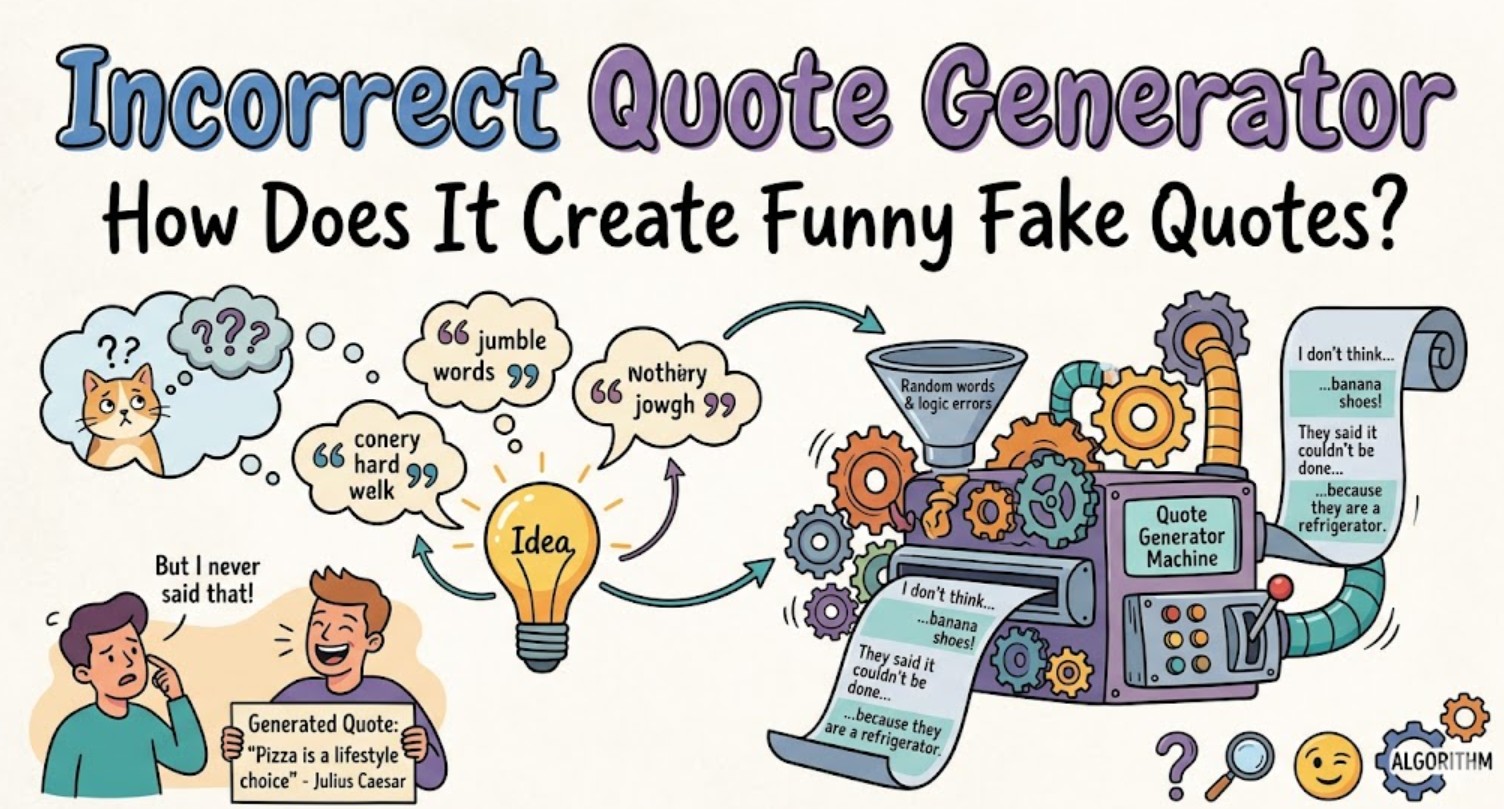
An Incorrect Quote Generator is an online tool that creates fake, funny, or out-of-context dialogue using names entered by the user. These quotes are not real statements. They are usually made for humour, fandom posts, memes, writing prompts, roleplay ideas, or social media content. The idea is simple: add a few names, click generate, and the tool creates a short conversation that sounds amusing, chaotic, dramatic, or intentionally unrealistic.
The phrase “incorrect quote” became popular in fandom spaces, where fans imagined characters saying things they never actually said. Over time, these generators became useful beyond fandom. Writers use them for quick dialogue ideas, meme pages use them for jokes, and casual users use them for entertainment. The key point is that every generated quote is fictional and should never be treated as a real quote.
What Is an Incorrect Quote Generator?
An Incorrect Quote Generator is a creative tool that turns names into short fictional conversations. A user may enter the names of friends, fictional characters, original characters, celebrities, or public figures. The generator then places those names into prewritten dialogue templates. The result is usually a humorous exchange that feels random, exaggerated, or surprisingly fitting.
These tools are popular because they are fast and easy to use. You do not need strong writing skills to create something funny. The generator does most of the work by combining names with joke-style dialogue patterns. This makes it useful for fandom creators, meme accounts, casual writers, and anyone who wants quick entertainment without starting from a blank page.
How Does an Incorrect Quote Generator Work?
Most incorrect quote generators use a template-based system. The tool stores many short dialogue formats, then randomly inserts the names entered by the user. For example, one template may create a chaotic group conversation, while another may create a sarcastic one-line exchange between two characters. This is why the same generator can produce different results each time.
Some newer tools may use artificial intelligence, but many classic generators are much simpler. They rely on random selection, saved prompts, and character placeholders. This is not a weakness. In fact, simple template-based tools often work well because their humour comes from timing, contrast, and unexpected character placement. The fun is seeing familiar names placed into situations that feel completely wrong but still entertaining.
Why Are Incorrect Quotes So Popular Online?
Incorrect quotes became popular because they are easy to share and easy to understand. A short fake conversation can show a character’s personality, exaggerate a friendship, or turn a serious person into someone funny. In fandom spaces, users often enjoy imagining how characters would behave outside their original story. That creative freedom is a major reason these quotes spread across Tumblr, Twitter, TikTok, Reddit, and other communities.
The format is also flexible. It can be used for fictional characters, friend groups, gaming teams, workplace jokes, or original story characters. Fanlore’s page on incorrect quotes as a fandom format explains how this style became part of fan-created content. That background helps show why the trend is not just random humour. It is also a form of creative expression.
Best Ways to Use an Incorrect Quote Generator
The best use of an Incorrect Quote Generator is entertainment. You can use it to create funny posts, character jokes, writing warm-ups, or quick social captions. Writers often use these tools to test how different characters might sound together. Even if the generated line is silly, it can spark a better scene, a stronger joke, or a new character idea.
These generators can also help with social media content. A short fake quote is easier to read than a long caption, especially when it has a clear punchline. Meme pages can use them for fictional casts, friend groups, or gaming communities. Still, it is better to edit the quote before posting. A small rewrite can make the dialogue sound more natural and less generic.
Things to Know Before Sharing Generated Quotes
The most important rule is simple: do not present generated quotes as real statements. An incorrect quote is fictional by design. If you use the name of a real person, make sure the post clearly looks like humour, parody, or creative content. Misleading readers can damage trust and may cause problems if the quote is sensitive or offensive.
You should also review the content before publishing. Some generators may create jokes involving romance, arguments, adult themes, insults, or uncomfortable situations. This is especially important when using names of real people, minors, public figures, or sensitive communities. A good generated quote should be funny without creating confusion, harassment, or false information.
Conclusion
An Incorrect Quote Generator is a simple but entertaining tool for creating fictional dialogue. It works by placing user-entered names into funny quote templates, producing short conversations that are often dramatic, chaotic, or humorous. These tools are especially popular in fandoms, meme culture, roleplay spaces, and creative writing communities.
The main thing to remember is that generated quotes are not real. They should be used for fun, writing practice, and social content, not as factual statements. When used responsibly, an Incorrect Quote Generator can be a quick source of humour, inspiration, and shareable creative ideas.
FAQs
What is an Incorrect Quote Generator?
An Incorrect Quote Generator is an online tool that creates fake and funny dialogue using names entered by the user.
Are incorrect quotes real?
No. Incorrect quotes are fictional. They should not be treated as real statements from a person or character.
Can I use an Incorrect Quote Generator for writing?
Yes. Writers often use these tools for dialogue practice, character ideas, and creative prompts.
Is it safe to post generated quotes online?
Yes, as long as the quote is clearly fictional, respectful, and not presented as something a real person actually said.